
Borders, Belonging, and the African Diaspora
Borders, Belonging, and the African Diaspora, organized by the Afro-Romance Institute, is an interdisciplinary conference that examines the complex relationships between borders, identity, migration, and belonging across African and Afro-Romance diasporic communities. Bringing together scholars, artists, and activists, the conference explores Afro-diasporic identities and migration, race and citizenship, memory and trauma, and the role of archives in shaping collective histories. Through engagements with Afro-feminist and decolonial thought, as well as language, hybridity, and performance, the event fosters critical dialogue on how diasporic communities navigate, challenge, and reimagine boundaries in contemporary and historical contexts.
Register Now
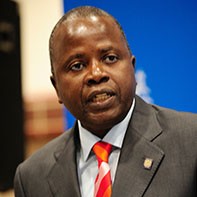
Keynote Speaker
Dr. M'baré N'gom
"Linguistic Dissidence and Aesthetic Expression in African Literature in Transcontinental (European) Languages"
M’baré N’gom earned a Doctorate in Iberian and Ibero-American Studies from the Université de Paris-Sorbonne (Paris IV, France), and a Diplôme d’Etudes Approfondies (D.E.A.) from the same institution. In addition, he received a degree in International Studies/Diplomacy from Escuela Diplomática de España (School for Diplomacy), Madrid, Spain. He is a Professor of Spanish and Latin American Studies, and French and Francophone Studies at Morgan State University. He also teaches courses in African cinema, Latin American cinema, and International Studies. He currently serves as Dean of the College of Liberal Arts at Morgan State University.
Conference Program
Friday, April 17, 2026
| Time | Tile | Panel Description | Location |
|---|---|---|---|
| 8:30-8:55am | Breakfast | N201AB Memorial Union | |
| 9-9:30am | Opening Remarks | Memorial Union North Room: N201 AB | |
| 10-11:40am | Panel 1: Trauma, Colonial Legacies, and Epistemic Resistance
Moderator: Daniel Sipe | Genocide narratives, colonial afterlives, and migratory returns converge to expose the fragility of repair and the persistence of historical violence. Mutilated bodies and compromised systems of care reveal trauma as both intimate wound and structural inheritance, while the return to the homeland complicates ideas of belonging and reintegration. Migrant feminine writing further reconfigures subjectivity through narrative self-fashioning and linguistic sensuality, positioning literature as a space where loss, desire, and survival are renegotiated. | Memorial Union North Room: N214A |
| 10-11:40am | Panel 2: Exile, Migration, and Fractured Belongings
Moderator: Valerie Kaussen | Exile, migration, and inherited histories unsettle fixed notions of belonging across African and Afro-diasporic contexts. Literary representations of fractured memory, constrained hospitality, enslaved women’s resistance, and diasporic reinvention reveal home as a contested and continually reconfigured space. Across temporal and geographic dislocations, identity emerges through acts of remembrance, survival, and imaginative liberation. | Memorial Union North Room: N214B |
| 10-11:40am | Panel 3: Gendered Voices, Feminist Resistance, and Counter-Archives
Moderator: Iva Youkilis | Race, rage, migration, and symbolic rupture shape contemporary African and Afro-diasporic cultural production. Emotional geographies map the lived experience of Blackness, while poetry forged in pain transforms anger into aesthetic defiance. Questions of spatial belonging intersect with critiques of phallocentric meaning, revealing identity as fractured, negotiated, and resistant within racialized and migratory landscapes. | Memorial Union North Room: N214C |
| 10-11:40am | Panel 4: Afro-Diasporic Resistance, Marronage, and Cultural Memory
Moderator: Celia Keyser | Marronage and fugitivity function as enduring frameworks for Afro-diasporic resistance and collective survival. Theatre, narrative, and social analysis illuminate flight, empathy, diasporic reimagining, and responses to intra-community violence as strategies of resilience. Marronage appears not merely as historical practice but as a living cultural and political grammar for confronting oppression and sustaining memory. | Memorial Union North Room: N214DE |
| 10-11:40am | Panel 5: Contraarchivo, Doloridad y Afecto-Ancestralidad
Moderator: Yesenis Escobar Espitia | Language operates simultaneously as instrument of authority and site of negotiation across varied geopolitical contexts. Legislative discourse, digital code-switching, global linguistic flows, and literary constructions of paradoxical hybridity expose the tensions embedded in “permitted” identities. Hybridity emerges as a dynamic arena where political power, cultural expression, and self-definition converge and collide. | Memorial Union North Room: N201C |
| 12-1pm | Lunch (On Your Own) | ||
| 1:30-3:10pm | Panel 6: Literature, Borders, and the Politics of Narrative Belonging
Moderator: Guadalupe Anzaldo Pérez | Geographic, cultural, and symbolic borders structure literary negotiations of belonging across Lusophone, Francophone, and diasporic traditions. Displacement and unsettled identities reveal tensions between rootedness and mobility, while aesthetic strategies such as the marvelous real and diasporic narration reconfigure narrative space. Storytelling itself becomes a means of redefining nation, community, and affiliation across fractured terrains. | Memorial Union North Room: N214A |
| 1:30-3:10pm | Panel 7: Education, Community, and Applied Afro-Diasporic Studies
Moderator: Carla Cornette | Educational spaces serve as laboratories for Afro-diasporic identity formation and cultural negotiation. Pedagogies of the Global Black Hispanophone, second-language acquisition, and student belonging demonstrate how theory and practice intersect in institutional contexts. Classrooms become transformative sites where identities are affirmed, contested, and mobilized within local and global frameworks. | Memorial Union North Room: N214B |
| 1:30-3:10pm | Panel 8: Fronteras y Desterritorializaciones: África Global
Moderator: Jeanne Rosine Abomo | Processes of deterritorialization and reterritorialization reshape Africa and its diasporas within global circuits. Cultural practices, return narratives, popular culture, and transatlantic artistic forms reimagine Africa as mobile, reclaimed, and continually evolving. Identity emerges through reinvention and movement, challenging fixed geographies and reconfiguring Africa’s global presence. | Memorial Union North Room: N214C |
| 1:30-3:10pm | Panel 9: Voices in Between: Language, Politics, and Hybrid Identities
Moderator: Charlotte Blair | Counter-archival practices foreground what remains unrecorded, silenced, or affectively inscribed beyond official history. Concepts such as doloridad and ancestral memory illuminate alternative repositories grounded in pain, relationality, and embodied remembrance. Literature and cultural production thus enact historical reclamation through affective and epistemic resistance. | Memorial Union North Room: N214DE |
| 1:30-3:10-pm | Panel 10: Colonial Knowledge, Mobility, and Afro-Diasporic Cultural Formations
Moderator: Worlali Wormenor | Colonial knowledge systems and transnational mobility have profoundly shaped Afro-diasporic identities. From eighteenth-century correspondence to Caribbean mysticism, postwar migration, and contemporary performance culture, movement reconfigures political belonging and artistic expression. The circulation of bodies, ideas, and forms reveals cultural production as a dynamic response to colonial power and historical memory. | Memorial Union North Room: N201C |
| 3:20-4:40pm | Documentary Screening Juanamaria Cordones Cook: Eugenio Hernández Espinosa y su teatro negro / and his Black Theater Moderator: Elvira Aballí Morell | Eugenio Hernández Espinosa y su teatro negro/Eugenio Hernández Espinosa and His Black Theater (Havana, 2023, 57 minutes, English subtitles) Production and direction: Juanamaría Cordones-Cook Filmed between 2012 and 2022, this documentary traces the personal and artistic journey of Eugenio Hernández Espinosa (Havana, 1936–2022), one of the most important Afro-Hispanic playwrights of the twentieth century and the founder and director of the Caribbean Theater Group in Havana. With a prolific and diverse body of work, Hernández Espinosa authored dozens of plays performed by major theater companies in Cuba and adapted for film and television. Rooted in the lived realities of Afro-Cuban communities, his theater explores the struggles, spiritual traditions, and everyday expressions of Afro-Cuban popular culture. Drawing on the island’s rich syncretic heritage, his plays are marked by vibrant colloquial language and powerful portrayals of cultural resistance and identity. Through archival materials, interviews, and performance excerpts from his most important works, the film brings Hernández Espinosa’s dramatic universe to life. The documentary is further enriched by reflections from leading Cuban intellectuals and artists, including Rogelio Martínez Furé, Jorge Perugorría, Vivian Martínez Tabares, Nancy Morejón, Alberto Curbelo, Fátima Patterson, Inés María Martiatu Terry, Francisco López Sacha, and Monse Duany, among others. | Memorial Union North Room: N214AB |
| 5-7pm | Keynote Address & Banquet Dinner Speaker: Dr. M'bare N'gom (Morgan State University) Moderator: Mamadou Badiane | Memorial Union North Room: N201AB |
Saturday, April 18, 2026
| Time | Title | Panel Description | Location |
|---|---|---|---|
| 8:30-8:55am | Breakfast | Leadership Lounge, MU Student Center | |
| 9-11:30am | Round Table: Afro-Diasporic Thought Across Borders
Moderator: Joseph Otabela | Student Center Room: Leadership Auditorium | |
| 11:40am-12:50pm | Lunch (On Your Own) | ||
| 1-2:40pm | Panel 11: Identity, Power, and Belonging
Moderator: Michelle Cabarcas | Postcolonial and diasporic identities unfold within contested terrains of power and recognition. Indigenous language preservation, separatist politics, racialized urban experience, and the coloniality of migration expose the structural forces shaping collective and individual subjectivities. Sovereignty and belonging remain negotiated processes within historically stratified spaces. | Student Center Room: 2205 A & B |
| 1-2:40pm | Panel 12: Sound, Performance, and Decolonial Aesthetics
Moderator: Caroline Dede-Nartey | Sound, performance, and visual culture articulate decolonial aesthetics across African and Afro-diasporic contexts. Afrobeat, Sankofa memory practices, religious and communal formations, and Afro-Cuban feminist cinema reclaim history while challenging colonial epistemologies. Artistic expression becomes a medium for imagining alternative futures grounded in Black experience and resistance. | Student Center Room: 2206 A |
| 1-2:40pm | Panel 13: Nuevo Eje del Hispanismo Afro-Africano
Moderator: Alain Lawo-Sukam | An Afro-African axis within Hispanism foregrounds transatlantic crossings, colonial rupture, and decolonial return in Spanish-language cultural production. Intellectual itineraries, migration toward the Global North, and the philosophy of Sankofa reorient Hispanism beyond Eurocentric canons. Black transnational histories and epistemic renewal redefine the field through Afro-African perspectives. | Student Center Room: 2206 B & C |
| 3-4:30pm | Documentary Screening
Moderator: William Luis | Manuel Zapata Olivella This documentary feature explores the life and intellectual legacy of the Colombian writer, anthropologist, and cultural activist Manuel Zapata Olivella, one of the most influential voices in Afro-Colombian cultural history. Through his travels, writings, and encounters with artists and intellectuals across the Americas and beyond, the film traces Zapata Olivella’s lifelong effort to understand the shared histories and cultural expressions of African-descended peoples. At the center of his thought lies a powerful idea: that resistance, solidarity, and cultural creativity within the African diaspora emerged from the traumatic experience of the transatlantic slave trade. Even amid violence and displacement, Africans preserved languages, spiritual traditions, and artistic forms that would reshape the cultural landscapes of the Americas. Driven by deep curiosity and commitment, Zapata Olivella traveled widely—often under difficult conditions—seeking dialogue with communities, musicians, writers, and activists whose lives embodied these histories. His journeys were less about observation than about listening, learning, and building connections across diasporic worlds. In pursuing this mission, he frequently placed his intellectual and political commitments above personal life, convinced that the long-term significance of his work would eventually be recognized. Through archival materials, testimonies, and cultural reflections, this film presents Zapata Olivella’s life as a gateway into the broader Afro-descendant universe of Colombia and the Americas. | Student Center Room: Leadership Auditorium |