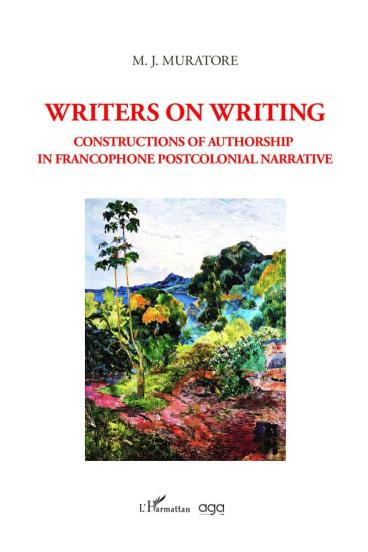
Writers on Writing: Constructions of Authorship in Francophone Postcolonial Narrative
Between the world and its narration, between the authority to speak and the limits of representation, literature confronts the conditions of its own possibility. Notably, in Rachida Madani’s L’histoire peut attendre, Ousmane Sembène’s Le docker noir, Joseph Zobel’s La rue Cases-Nègres, Ferdinand Oyono’s Une vie de boy, Boubacar Boris Diop’s Murambi, le livre des ossements, and Patrick Chamoiseau’s Solibo Magnifique, the writer emerges as a figure through whom literature turns back upon itself, interrogating the grounds of its own authority.
At the fault lines of authorship, historical memory, and political power, writing becomes both the scene and the object of representation. Inscribed within the text, the writer unsettles the borders between experience and narration, knowledge and invention, the right to speak and the claim to speak for others. In the postcolonial Francophone imagination, authorship is less a position than a predicament: a space of tension where the desire to narrate encounters the opacity of history and the ethical and epistemological limits of its telling.
These works offer no final theory of literary authority. Instead, they inhabit its fractures, tracing the uncertain grounds on which literature dares to know, remember, and give form to the world
PUBLISHER: Les Éditions L’Harmattan in Paris
YEAR PUBLISHED: 2026
Author Information